
A realistic crochet dog is more than a collection of correctly counted rounds. Its personality comes from proportion, posture, color placement, texture, and the careful positioning of every facial feature. When those elements work together, the finished amigurumi begins to suggest the expression and character of a real companion.
The Cocker Spaniel is especially well suited to this kind of detailed crochet. Long flowing ears frame the face, a broad muzzle creates the breed’s gentle profile, and warm coat colors can be built from only a few carefully chosen yarn shades. Even before the final stitches are added, the silhouette is easy for dog lovers to recognize.
This guide explores how to approach a realistic Cocker Spaniel project with confidence, from selecting yarn and planning colors to shaping the muzzle, balancing the sitting pose, attaching the ears, stuffing smoothly, and personalizing the finished dog. Makers who prefer to follow an organized design can use the Realistic Cocker Spaniel Crochet Pattern from CozyMammaCrochet to create Biscuit, the caramel-and-cream dog shown in the listing.
What Makes a Crochet Cocker Spaniel Look Realistic?
Realism in amigurumi does not require copying every individual hair. It comes from choosing the few characteristics that make the breed immediately recognizable and giving those features the correct visual importance.
For a Cocker Spaniel, the strongest identifying details include:
- long, low-set floppy ears
- a rounded head and defined muzzle
- large, gentle-looking eyes
- a dark nose that anchors the face
- a compact body with a soft chest
- substantial paws
- a warm, friendly sitting posture
- coat texture around the ears and legs
If every feature receives equal attention, the design can become visually busy. A stronger approach is to prioritize the ears, muzzle, eyes, and paws. These four areas create most of the spaniel character, while the body supports the overall pose.
The goal is not photographic imitation. It is a convincing handmade interpretation that captures the breed’s expression while still looking unmistakably crocheted.
The Distinctive Details of Biscuit the Cocker Spaniel
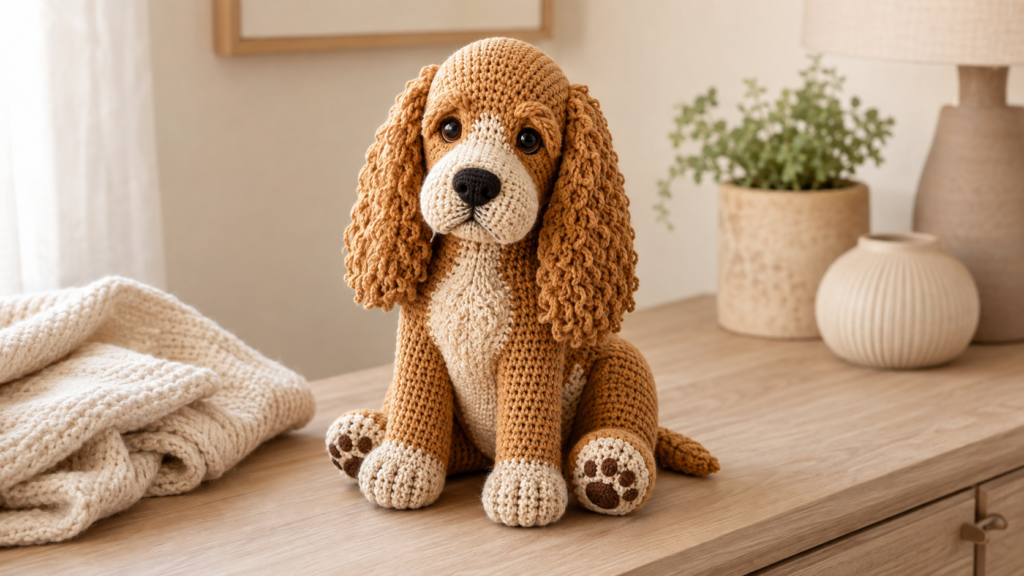
Biscuit uses a golden-caramel main color with a pale cream muzzle, chest, and paws. The face is framed by long brown textured ears and finished with a black nose and large dark eyes. Small paw details and natural body shaping make the sitting dog feel more lifelike than a simple rounded puppy doll.
This color balance is effective because the cream areas direct attention toward the face and front paws. The darker ears create a frame around the head, while the caramel body keeps the overall appearance warm and cohesive.
The illustrated pattern materials indicate a finished height of approximately 28–34 cm (11–13 in), although the final measurement will vary with yarn, hook, tension, and stuffing. The construction is organized into seven main pieces and supported by 11 illustrated diagrams. The current Etsy listing presents it as an intermediate project and recommends basic amigurumi experience.
Those details make Biscuit a substantial plush project rather than a miniature keychain or quick no-sew animal. It gives the maker room to practice shaping and thoughtful assembly while producing a finished dog large enough for the breed features to remain visible.
Skills That Help With Realistic Dog Amigurumi
The Etsy listing classifies the pattern as intermediate. A crocheter will be better prepared if already comfortable with the fundamental structure of amigurumi and willing to spend time on assembly.
Helpful skills include:
- beginning with a magic ring or the pattern’s stated starting method
- working single crochet in continuous rounds
- using a stitch marker and tracking round totals
- increasing and decreasing evenly
- changing colors without creating loose joins
- working through the front or back loop when directed
- shaping small three-dimensional pieces
- stuffing gradually and evenly
- pinning parts before sewing
- attaching pieces with strong, tidy stitches
- embroidering facial or paw details
- reading US crochet terminology
The stitches themselves may be familiar, but realistic construction asks the maker to notice how small choices affect the final shape. A slightly overstuffed muzzle, uneven ear placement, or twisted front leg can alter the expression even when the stitch counts are correct.
Read the entire pattern before beginning. Mark color changes, note which parts should be stuffed firmly or lightly, and identify where long sewing tails are required. This preparation is especially useful when a design contains similar paired pieces.
Choosing Yarn for a Detailed Cocker Spaniel Plush
Yarn selection affects more than color. It determines how clearly the shaping can be seen, whether stuffing remains hidden, how the ears drape, and whether the finished dog feels firm or soft.
Start with the yarn weight and hook recommended in the PDF. When substituting another brand, compare:
- yarn weight category
- meters or yards per skein
- fiber content
- recommended hook range
- strand thickness
- surface texture
- wash and care instructions
A smooth yarn usually makes increases, decreases, and facial shaping easier to see. A lightly fuzzy yarn may soften the finished appearance, but it can also make stitches harder to count. For the first version of a detailed pattern, a yarn with reliable stitch definition is often the most manageable choice.
Use yarns of similar thickness for the caramel body, cream accents, and brown ears. If the ear yarn is much heavier, the ears may become bulky and change the balance of the head. If it is much thinner, they may look small or lack the intended texture.
Make a small test circle and check whether the fabric is dense enough to hide stuffing. Adjust the hook only when necessary, keeping in mind that a smaller hook creates firmer fabric and can also reduce the final size.
Building a Natural Biscuit-Colored Palette
The word “biscuit” suits a Cocker Spaniel palette beautifully: warm golden brown, caramel, cream, and deeper chocolate accents. The colors feel realistic without requiring complicated spot patterns.
For a classic Biscuit version, consider four visual roles:
- Main coat: golden caramel or warm tan.
- Light markings: ivory, oatmeal, or pale cream.
- Ear depth: medium brown or chocolate.
- Facial contrast: black or very dark brown.
Place the skeins together in natural daylight before beginning. The cream should be light enough to separate the muzzle and paws from the body, but not so bright that it feels disconnected from the warm coat.
Other Cocker Spaniel-inspired palettes can work with the same structure:
- black body with charcoal ears and a small white chest marking
- chocolate brown with warm beige muzzle and paws
- buff or honey gold with ivory details
- red-gold with chestnut ears
- black and tan with carefully placed cream accents
- soft gray and white for a stylized neutral version
Changing color is the safest way to personalize the dog without altering the pattern’s proportions. Photograph your chosen yarn order before starting so the same palette is used consistently across the face, body, paws, and ears.
A Practical Materials Checklist
Follow the exact supply list in the purchased pattern for quantities and specifications. A realistic Cocker Spaniel amigurumi project may generally require:
- main-color yarn for the head and body
- cream yarn for the muzzle, chest, and paws
- darker yarn for the ears or additional coat depth
- black or dark brown yarn for embroidery
- the recommended crochet hook
- polyester fiberfill
- stitch markers
- a yarn needle
- sharp scissors
- pins for temporary positioning
- a row counter or project notebook
The pictured dog has dark eyes and a black nose. Select facial materials based on the intended use of the finished plush. Embroidered features can avoid detachable plastic parts, while other methods should be attached according to the pattern and inspected carefully.
Keep extra main-color yarn available for assembly. Sewing large pieces and hiding joins can require more yarn than expected, particularly if you reposition a part more than once.
How the Cocker Spaniel Construction Comes Together
The precise rounds and stitch counts belong to the pattern, but understanding the construction sequence makes the project easier to organize.
1. Form the head and muzzle
The head creates the foundation for the dog’s expression. The muzzle adds the forward projection associated with a spaniel rather than leaving the face completely round. Work the shaping carefully and compare both sides as stuffing is added.
2. Build the body and sitting posture
The body needs enough structure to support the head while maintaining a soft plush appearance. Strategic increases and decreases create the chest, back, and seated base.
3. Make the front and back limbs
The paws provide both character and stability. Paired parts should match in length, stuffing level, and color placement. Mark the front, back, left, and right orientation if the shaping is not symmetrical.
4. Crochet the long ears
The ears are a defining feature and may use texture or shaping to suggest the longer spaniel coat. Make both with the same hook, tension, and yarn so their finished length remains consistent.
5. Add facial and paw details
The nose, mouth, eye placement, paw pads, or toe lines help transform the individual pieces into a recognizable dog. Mark every feature before making permanent stitches.
6. Assemble the dog
Pin all major pieces before sewing. Check the pose from the front, side, back, and above. Attach in stages so the alignment can be corrected before every seam is closed.
7. Complete the final shaping
After assembly, redistribute stuffing gently, shape the muzzle and paws with your hands, hide yarn ends, and inspect every connection.
This roadmap helps with planning, but the actual project should follow the PDF’s written instructions, diagrams, and placement guidance.
Shaping the Muzzle and Gentle Spaniel Expression
The muzzle is one of the most important pieces in a realistic dog face. It should project forward enough to establish the canine profile while remaining proportionate to the head.
Before sewing:
- Mark the vertical center of the face.
- Position the muzzle on that line.
- Check its height relative to the eyes.
- Pin around the full edge.
- View the head from both sides.
- Add or remove a small amount of stuffing if the profile looks uneven.
Sew gradually, alternating between opposite sides rather than completing the entire left side first. This helps prevent the muzzle from shifting off-center.
If the nose is embroidered, build the shape with controlled passes and avoid pulling so tightly that the muzzle collapses. A dark brown nose can create softer contrast, while black gives a clearer, more graphic finish.
The mouth line should complement the muzzle rather than dominate it. Small embroidered changes can create a calm, curious, or slightly smiling expression.
Positioning the Eyes for a Soulful Look
Cocker Spaniels are often recognized by their gentle, expressive eyes. In crochet, that feeling depends heavily on placement rather than eye size alone.
Eyes placed too close together can make the muzzle appear narrow. Eyes placed too far apart may disconnect the face from the nose. Use the muzzle center and the base of the ears as visual reference points.
To improve symmetry:
- count the rounds from the top of the head
- count the visible stitches from the center line
- mark both positions before attaching anything
- compare the face in a mirror or phone photograph
- make one adjustment at a time
A photograph often reveals uneven placement more clearly than looking directly at the doll. Take a front-facing picture before committing to the final attachment.
Small eyebrow, eyelid, or eye-outline stitches can change the expression, but add them sparingly. The long ears and broad muzzle already create a strong breed identity.
Creating Long, Textured Floppy Ears
The ears are Biscuit’s most recognizable feature. Their length frames the face, while the textured surface suggests the silky feathering of a real Cocker Spaniel.
Consistent tension is especially important when making a pair. Complete the ears close together in time and compare them after every major shaping section. If one is noticeably longer, identify the counting or tension difference before assembly.
During placement:
- pin both ears at the same round height
- check the distance from each eye
- allow the lower sections to fall naturally
- view the head from the front and back
- confirm that the ears do not twist in opposite directions
Sew the top edge securely while allowing the lower ear to remain flexible. Pulling the entire ear tightly against the head can remove the drape that gives the spaniel its characteristic silhouette.
If the texture needs light shaping, use your fingers and follow the yarn-care guidance. Avoid aggressive brushing unless the pattern and yarn are specifically designed for it.
Making the Paws Look Detailed and Balanced
Cream paws draw attention to the lower body and help define the sitting pose. Their placement needs to feel balanced even when the finished dog is soft rather than rigid.
Before assembly, compare all paws for:
- length
- width
- stuffing level
- color-change height
- direction of any shaped side
- placement of embroidered toe or pad details
Pin the front legs at an equal distance from the chest center. Set the back limbs so the body has a stable visual base. Place the dog on a flat surface and look at it from eye level before sewing.
Paw embroidery should remain proportional. A few neat lines or pads can communicate the idea without covering the cream crochet fabric. Use consistent thread tension so one paw does not pucker more than the other.
Stuffing for Smooth, Lifelike Proportions
Stuffing changes the shape as much as the crochet itself. Too little can leave the head and body collapsed; too much can stretch the stitches, distort the muzzle, and make assembly difficult.
Use small pieces of fiberfill and distribute them gradually. Pay particular attention to:
- the sides of the head
- the muzzle transition
- the neck area
- the chest
- the seated base
- the ends of the paws
Use the handle of a crochet hook or another blunt tool to guide stuffing into narrow areas without forcing it through the stitches. Pause frequently and rotate the piece in your hands.
Paired limbs should be stuffed to a similar firmness. The ears may require little or no stuffing depending on their construction; follow the pattern so they retain the intended drape.
Assembly Tips for a Professional Finish
Detailed amigurumi benefits from slow assembly. Sewing immediately after completing each part can lock in a placement that looks correct alone but feels uneven once the full dog is visible.
For a more controlled result:
- Finish and stuff every major piece.
- Mark the center lines of the head and body.
- Pin the muzzle, ears, and eyes.
- Pin the head to the body.
- Position all four limbs.
- Check the silhouette from every direction.
- Photograph the arrangement.
- Sew the major joins in stages.
Use small, regular stitches and catch stable loops on both pieces. Recheck alignment several times while sewing. If a part begins to rotate, remove only the most recent stitches and correct the angle before continuing.
Secure yarn ends inside the stuffed piece rather than leaving knots on the surface. After the final seam, gently massage the stuffing away from the join to smooth the contour.
Personalizing Biscuit to Resemble a Favorite Dog
A pet-inspired version can be meaningful without becoming an exact portrait. Focus on two or three recognizable elements rather than trying to recreate every marking.
Possible changes include:
- adjusting the main coat from caramel to buff, red, chocolate, or black
- changing the muzzle and chest markings
- making one ear slightly darker
- adding a small forehead or paw marking
- choosing dark brown instead of black facial embroidery
- creating a collar in a familiar color
Keep the yarn weight consistent and avoid altering the pattern’s stitch counts unless you understand how the change will affect the proportions.
For a memorial piece, work from several clear photographs: a straight-on face, side profile, seated pose, and close-up of coat markings. If the dog is being made as a gift after a loss, first consider whether the recipient would welcome a handmade remembrance. Thoughtful timing matters as much as visual accuracy.
Display, Gift, and Care Ideas
Biscuit’s realistic sitting pose can suit several uses:
- a gift for a Cocker Spaniel owner
- pet-inspired home or office decor
- a handmade nursery accent
- a keepsake for a dog-loving family
- a detailed amigurumi collection
- an example piece for a crochet display
Include a care card with the yarn fiber content and the washing instructions from the yarn label. If the finished item contains attached eyes or other components, explain how the recipient should inspect them.
For child-directed use, select age-appropriate materials, secure every seam and feature, and inspect the plush regularly for wear. If selling completed dogs, check the pattern’s usage terms and the product-safety requirements that apply where you live and sell.
Why Use a Detailed PDF Crochet Pattern?
A realistic dog design requires compatible proportions across the head, muzzle, ears, body, and limbs. A small change in one area affects the way every other piece fits. Working from a structured pattern removes much of the trial and error while still leaving room for color personalization.
The Realistic Cocker Spaniel Crochet Pattern: Biscuit Dog Amigurumi is a digital CozyMammaCrochet PDF written in US crochet terms. The Etsy listing includes step-by-step shaping instructions, an ear and facial-detailing guide, assembly guidance, and finishing tips. It is classified as intermediate, with basic amigurumi experience recommended.
The product is a downloadable crochet pattern, not a completed physical dog. Makers supply their own yarn, hook, stuffing, and tools to create the plush.
Frequently Asked Questions
Is the Etsy listing for a finished Cocker Spaniel plush?
No. It is a digital PDF crochet pattern. No physical dog or finished toy is shipped.
What skill level is the Biscuit pattern?
The current Etsy listing classifies it as intermediate and recommends basic amigurumi experience. Makers should be comfortable working in rounds, increasing, decreasing, stuffing, counting stitches, changing colors, and sewing pieces together.
What terminology does the pattern use?
The Etsy listing states that the written pattern uses US crochet terms.
How large is the finished dog?
The illustrated pattern materials indicate approximately 28–34 cm (11–13 in) tall. The exact size depends on the yarn, hook, tension, and stuffing.
Can I change the coat colors?
Yes. Color changes are the easiest way to create a buff, red, chocolate, black, or pet-inspired Cocker Spaniel without changing the construction. Use yarns with similar thickness and fiber behavior.
Can I use another yarn brand?
Usually, provided it closely matches the recommended weight and creates dense amigurumi fabric. Compare fiber, yardage, thickness, and hook recommendations, then make a small test piece.
Can I make Biscuit larger or smaller?
Changing the yarn weight and matching hook will alter the overall size, yardage, stuffing requirements, and possibly the balance of the sitting pose. Use the same yarn weight across every body part so the proportions remain consistent.
Can I sell finished dogs made from the pattern?
Check the current designer terms included with the purchased pattern or contact the seller before selling completed pieces. Usage and attribution rules vary between designers.
How do I download the Etsy PDF?
After payment is confirmed, Etsy makes the file available through the account used for the purchase. If the Etsy app does not show a download button, open Etsy in a web browser or use a computer and check the Purchases section.
A Crochet Dog With Character in Every Detail
The most convincing Cocker Spaniel amigurumi is not necessarily the one with the most complicated stitches. It is the one in which every choice supports the same character: warm coat colors, a centered muzzle, soulful eyes, long balanced ears, carefully placed paws, and a gentle sitting posture.
Biscuit offers the pleasure of watching those details develop one section at a time. The head becomes expressive after the muzzle is attached. The face gains softness when the ears begin to frame it. The cream paws establish the pose, and the final embroidery gives the dog its individual personality.
With patient counting, smooth stuffing, and careful assembly, a handful of yarn colors can become a recognizable spaniel full of handmade warmth—a project that rewards close attention from the first round to the final hidden yarn tail.