
Few crochet projects invite color and imagination quite like a unicorn. The familiar pony shape creates a charming foundation, while the horn, flowing mane, colorful tail, and tiny facial details turn an ordinary amigurumi animal into a character with its own personality.
A handmade crochet unicorn can be bright and playful, soft and pastel, or elegant and almost entirely neutral. It can become a birthday gift, nursery decoration, fantasy-themed collectible, or simply a joyful project for a crocheter who enjoys shaping individual pieces and watching them come together.
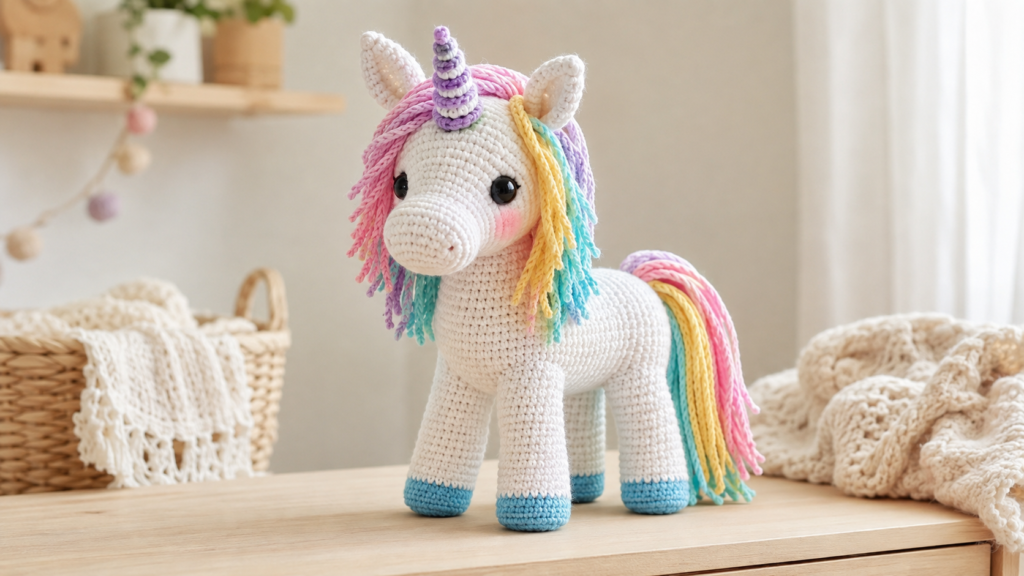
This guide explores the choices that matter when planning a rainbow pony doll: yarn, color order, construction, facial placement, mane styling, assembly, finishing, and care. If you prefer to follow an organized design, the Unicorn Amigurumi Crochet Pattern from CozyMammaCrochet provides the written instructions for creating the pictured white unicorn with its pastel rainbow details.
What Is Unicorn Amigurumi?
Amigurumi is the craft of crocheting small, three-dimensional characters, animals, and objects. Most designs use compact stitches worked in rounds, with increases and decreases creating the shape. The finished pieces are stuffed, positioned, and sewn together before the final decorative details are added.
A unicorn amigurumi begins with the recognizable structure of a horse or pony. The magical identity comes from a few defining features:
- a single horn centered on the forehead
- upright or softly angled ears
- a colorful mane running along the head and neck
- a full or flowing tail
- rounded hooves
- an expressive face
- fantasy-inspired colors and embellishments
Because each feature is made separately or added during finishing, a crochet unicorn offers plenty of room for personalization without requiring changes to the main body construction.
You may also find similar projects described as a crochet unicorn doll, rainbow pony amigurumi, unicorn plush pattern, fantasy horse crochet pattern, or magical pony toy. These phrases often overlap, although the pose, proportions, and skill level can differ between designs.
Why a Rainbow Unicorn Is Such a Satisfying Crochet Project
A unicorn offers a satisfying balance between repetition and creativity. The main body gives you the steady rhythm of amigurumi rounds, while the mane and tail let you work with several colors in smaller amounts. The horn, ears, muzzle, cheeks, and hooves create natural milestones, so the project continues to feel fresh as it grows.
It is an appealing choice for crocheters who enjoy:
- shaping three-dimensional animals
- combining neutral yarn with colorful accents
- practicing neat assembly
- experimenting with facial expressions
- using small amounts of leftover yarn
- making handmade fantasy gifts
- creating display pieces for a nursery or craft room
Unlike a one-color animal, a rainbow unicorn does not depend on a single perfect yarn shade. A coordinated selection of small color accents can make the finished doll look intentional and distinctive.
The Details That Define This Rainbow Pony Design
The CozyMammaCrochet unicorn has a soft white body, a pastel rainbow mane and tail, bright blue hooves, pink blushing cheeks, black facial details, and a purple spiral-style horn. Its four-legged standing pose gives the doll the silhouette of a small fantasy pony rather than a seated character.
Each detail serves a visual purpose. The white body creates a clean background for the rainbow colors. Blue hooves add contrast near the base and help define the legs. The purple horn draws attention to the face, while pink cheeks soften the expression. The mane and tail carry the widest range of colors, but their pastel tones keep the overall design cohesive.
When planning your own version, think of the project as three connected color groups:
- Main body: the dominant neutral or base shade.
- Character accents: hooves, horn, inner ears, cheeks, and facial embroidery.
- Fantasy colors: the mane and tail palette.
Repeating one or two accent colors across the horn, hooves, mane, or tail helps the doll feel balanced rather than randomly colorful.
Skills That Help With a Crochet Unicorn Pattern
The Etsy listing classifies this design as an intermediate crochet pattern. A crocheter will be better prepared if already comfortable with the basic language and construction of amigurumi.
Useful skills may include:
- beginning with a magic ring or the pattern’s chosen starting method
- working single crochet in continuous or joined rounds
- increasing and decreasing evenly
- counting stitches and marking the beginning of a round
- changing colors neatly
- crocheting small shaped pieces
- adding stuffing gradually
- sewing pieces in a symmetrical position
- embroidering simple facial details
- weaving in ends securely
Intermediate does not mean the project must feel intimidating. It means the final result depends on more than making the stitches alone. Accurate counting, patient shaping, color planning, and careful assembly all contribute to the finished appearance.
Before starting, read through the full pattern once. Highlight any unfamiliar abbreviations, identify when colors change, and note which pieces require long sewing tails. This quick preparation can prevent avoidable interruptions later.
Choosing Yarn for a Crochet Unicorn Doll
The yarn affects the finished size, stitch definition, softness, and stability of every part. Start with the yarn weight and hook size recommended in the PDF. If you substitute another brand, compare the weight category, fiber content, yardage, and recommended hook range rather than relying only on the appearance of the skein.
For a structured amigurumi unicorn, look for yarn that:
- produces clear, compact stitches
- does not shed excessively
- holds the shape of small pieces such as ears and horn
- is available in a coordinated rainbow palette
- can be cleaned according to the recipient’s needs
- has consistent thickness across all chosen colors
Mixing very different yarn textures can change the scale of individual parts. A fluffy mane may be a deliberate design choice, but using a much thicker yarn for the horn or hooves may affect their proportions. When combining brands, crochet a small test circle in each yarn to compare the resulting fabric.
A washable swatch is also helpful. It reveals whether the colors bleed, the fabric grows, or the texture changes after laundering.
Color Palette Ideas Beyond the Classic Rainbow
Rainbow yarn is the obvious choice for a unicorn, but it is not the only one. The body and mane can be adapted to suit a room, occasion, or recipient while keeping the same pattern construction.
Pastel rainbow
Combine blush pink, peach, butter yellow, mint, pale blue, lavender, and soft purple. This creates a gentle nursery-friendly look and works especially well with a white or cream body.
Bright rainbow
Use saturated red, orange, yellow, green, blue, and violet for an energetic toy with strong color contrast. A white body keeps the palette clear, while a pale gray body can make the colors appear even brighter.
Moonlight unicorn
Choose a charcoal, navy, or deep purple body with silver, icy blue, lavender, and white accents. A metallic-look yarn can be reserved for small details, provided it works comfortably with the pattern and intended use.
Woodland fantasy
Pair an oatmeal or warm beige body with dusty rose, rust, mustard, sage, teal, and plum. This gives the unicorn a softer handmade character that suits neutral home decor.
Monochrome magic
Select several shades from one color family, such as blush through burgundy or pale aqua through navy. The graduated mane still creates visual movement without using a traditional rainbow.
Arrange all chosen skeins side by side before beginning. Photograph the order so it remains consistent when you make the mane and tail later.
A Practical Materials Checklist
Always use the quantities and specifications listed in the pattern, since the finished size depends on the selected yarn, hook, and individual tension. A typical unicorn amigurumi project may require:
- main-color yarn for the head, body, and legs
- accent yarn for the hooves and horn
- several small yarn colors for the mane and tail
- dark yarn or embroidery thread for facial details
- the recommended crochet hook
- polyester fiberfill
- stitch markers
- a yarn needle
- small sharp scissors
- pins for temporary placement
- a row counter or project notebook
If the project will be handled regularly, select embellishments that suit its intended use. Embroidered facial features can create a soft expression without adding detachable plastic components. Whatever method you choose, attach every part securely and inspect the finished doll carefully.
How a Crochet Unicorn Usually Comes Together
The exact order and stitch counts belong to the pattern, but understanding the general construction makes the project easier to organize.
1. Crochet the legs and hooves
The hooves establish the lower color contrast and need to match as closely as possible. Make paired pieces in the same sitting when practical, using the same hook and tension. Mark each completed leg so their orientation remains clear during assembly.
2. Shape the body
The body provides the central structure for the standing pose. Count carefully through increase and decrease rounds, and stuff gradually so the shape remains smooth rather than lumpy.
3. Make the head and muzzle
The head carries most of the character. The muzzle should sit evenly on the center line, with enough shaping to create a gentle pony profile. Pin it in position before sewing and examine it from the front and both sides.
4. Form the ears and horn
Small pieces can change the expression dramatically. Make the ears as a matching pair and position the horn centrally between or slightly forward of them according to the pattern photographs and instructions.
5. Add facial details
Place the eyes, nostrils, mouth, lashes, or cheeks only after checking the head shape. Temporary pins or removable markers help compare both sides before anything becomes permanent.
6. Attach the head and legs
Stable assembly is especially important for a standing doll. Check the alignment on a flat surface as you pin the pieces. A small adjustment in leg placement can improve the balance and silhouette.
7. Build the rainbow mane and tail
Follow the planned color order and spacing. Step back occasionally to check the distribution from the front, side, and back. Add volume gradually so you can stop when the mane looks balanced.
This construction overview is for project planning; the PDF’s round-by-round directions, stitch totals, and placement guidance should be followed for the actual doll.
Creating a Balanced Standing Pose
A four-legged amigurumi character presents a different challenge from a seated doll. The legs need to look evenly spaced, and the body should appear level rather than tilting forward or to one side.
Before sewing permanently:
- Stuff all four legs to a similar firmness.
- Place the body on a flat surface.
- Pin the legs using the same spacing on both sides.
- View the doll from the front, back, and side.
- Adjust one leg at a time until the silhouette feels balanced.
- Sew in stages, rechecking the position as you work.
Handmade soft dolls may not stand independently in every yarn and tension combination. The goal is a visually balanced pose that matches the intended design, not a rigid structure. Avoid inserting unapproved wire or hard supports, particularly when the finished item may be handled by a child.
Making the Horn Look Neat and Magical
The horn is small, but it is the feature that immediately identifies the pony as a unicorn. Consistent tension helps it retain a tapered shape. Stuff only if directed, and use small amounts so the horn does not become uneven.
Before attachment, mark the center of the forehead. Pin the horn in place and check that it points in the intended direction when viewed from the side. Sew around the entire base using small, even stitches.
For a spiral appearance, the design may use color changes, surface detail, shaping, or a separate decorative element. Follow the pattern’s method rather than improvising a tight wrap that could distort the horn.
Styling a Rainbow Mane and Tail
The mane and tail are the most expressive parts of the project. Their color, thickness, length, and placement determine whether the unicorn looks soft and dreamy or bold and playful.
For an even finish:
- prepare strands or crocheted sections in a consistent size
- arrange colors before attachment
- repeat the same sequence along the mane
- distribute volume gradually instead of adding everything at once
- compare both sides of the neck as you work
- trim only after all sections are attached
If the tail uses several colors, place the longest or strongest shade near the center and distribute the others around it. Gently shape the finished fibers with your fingers. Avoid aggressive brushing unless the pattern and yarn are specifically suited to it.
Leftover yarn can be useful here, but check that each strand has a similar thickness. A single bulky color may dominate the mane even when the strand count is equal.
Facial Placement: The Secret to a Sweet Expression
Crochet faces are surprisingly sensitive to small changes. Eyes placed higher may create a more alert look; eyes placed slightly lower and wider apart can feel softer. Cheeks too close to the eyes may crowd the face, while a muzzle set off-center can make the entire head appear twisted.
Use the center of the horn and muzzle as a vertical reference line. Measure the distance from each eye to that line and compare the round height on both sides. Pin or mark every feature before stitching.
When embroidering:
- use manageable thread lengths to reduce tangling
- avoid pulling so tightly that the crochet fabric puckers
- bury and secure yarn tails inside the head
- pause after each feature and compare both sides
- add blush or cheek details last
Perfect mathematical symmetry is not required for a handmade character, but deliberate placement gives the unicorn a polished expression.
Finishing Tips for a Professional Handmade Look
Good finishing does not require complicated techniques. It comes from patient repetition of a few simple habits.
Count every shaping round. A missed increase in one leg or ear may only become visible during assembly.
Keep paired parts together. Store both ears, matching legs, and mane sections in labeled project bags.
Leave useful sewing tails. A tail that is too short makes neat attachment unnecessarily difficult.
Stuff gradually. Small pieces of fiberfill produce a smoother shape than one large clump.
Pin before sewing. Check the unicorn from all four sides and from above.
Use secure joining stitches. Catch stable stitches on both pieces rather than only surface fibers.
Hide ends carefully. Weave yarn through the stuffed piece, then gently reshape the area.
Photograph in natural light. A neutral background allows the rainbow mane and silhouette to remain the focus.
Gift and Display Ideas for a Handmade Unicorn
A finished crochet unicorn can suit many occasions without requiring elaborate packaging. Its strongest feature is the time and personality already built into the piece.
Consider it for:
- a unicorn-themed birthday
- a handmade nursery display
- fantasy shelf decor
- a rainbow-themed celebration
- a gift for an amigurumi collector
- a magical addition to a crochet market table
- a personalized keepsake inspired by favorite colors
For gifting, include a care card with the yarn fiber content and the washing instructions from the yarn label. A short handwritten note explaining the chosen rainbow palette makes the gift feel even more personal.
If the doll is intended for a young child, use age-appropriate materials and securely attached or embroidered features. Inspect seams and embellishments regularly. If you plan to sell finished dolls, review the designer’s usage terms and the toy-safety requirements that apply in your location.
Why Work From a PDF Unicorn Crochet Pattern?
Designing amigurumi from scratch involves more than imagining the finished shape. Each body section needs a workable stitch count, compatible proportions, a clear assembly order, and a repeatable method for forming the smaller details.
A PDF pattern organizes that process so the maker can focus on accurate crochet and careful finishing. The Unicorn Amigurumi Crochet Pattern: Easy Rainbow Pony Doll DIY is a digital CozyMammaCrochet product containing three PDF files. The listing describes step-by-step written instructions, assembly and finishing guidance, and directions for the unicorn doll, horn, ears, mane, tail, and body details. It is classified as intermediate, and the final size varies according to the yarn and hook used.
The listing is for instructions, not a finished physical unicorn. This distinction is important when choosing the project or sharing it with someone who wants to make the doll themselves.
Frequently Asked Questions
Is the Etsy listing for a finished crochet unicorn?
No. It is a digital crochet pattern delivered as three PDF files. No physical doll is shipped.
What skill level is the unicorn pattern?
The listing classifies the pattern as intermediate. It is best approached by someone already comfortable with amigurumi basics such as working in rounds, increasing, decreasing, counting stitches, stuffing, color changes, and sewing pieces together.
What does the pattern include?
According to the listing, it includes written instructions plus assembly and finishing guidance for the unicorn doll, horn, ears, mane, tail, and body details.
How large will the finished unicorn be?
The listing does not provide one fixed measurement. Finished size depends on the yarn, hook, tension, and stuffing. Use the recommended materials for proportions closest to the designer’s sample.
Can I change the rainbow colors?
Yes. Changing the mane, tail, horn, or hoof colors is a simple way to personalize the doll without altering its construction. Choose yarns with similar weight and texture to preserve consistent proportions.
Can I make the unicorn larger or smaller?
Using a different yarn weight and matching hook can change the overall size, but it also changes yardage, stuffing needs, firmness, and possibly stability. Keep all body-part yarns within the same weight family and make a test piece before committing to the full project.
Can I sell finished unicorns made from the pattern?
Check the designer’s current usage terms in the purchased files or contact the seller before offering finished pieces for sale. Pattern licenses and attribution requirements vary between designers.
How do Etsy digital downloads work?
Etsy makes the files available after payment is confirmed. If the mobile app does not show the download option, open Etsy through a web browser or use a computer and check the Purchases section of the account used for the order.
Bring Your Own Color Story to the Unicorn
The magic of a crochet unicorn does not come from using every color available. It comes from making thoughtful choices and repeating them with care: a balanced body, evenly shaped legs, a centered horn, expressive facial details, and a mane whose colors feel as though they belong together.
Whether you follow the pastel sample, choose a bold rainbow, or create an entirely new moonlight palette, the project offers many chances to add your own style. With patient counting and careful assembly, a collection of separate crochet pieces gradually becomes a cheerful fantasy pony full of handmade character.